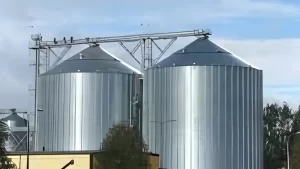


Grain storage is one of the most important aspects of modern agriculture. Farmers, food processing companies, grain traders, and storage facilities rely on grain silos to preserve harvested crops while maintaining their quality for long periods. A common question among first-time buyers is, “How does a grain silo work?” Understanding the working principle of a silo helps businesses choose the right storage system and maximize the life of their harvested grain.
A modern grain silo is much more than a large storage container. It is a complete storage system designed to protect grain from moisture, insects, rodents, temperature fluctuations, and spoilage. Advanced grain silos also include automated loading, unloading, aeration, and monitoring systems that ensure safe and efficient storage.
In this blog, we’ll explain how does a grain silo work, how do silos work, what are silos used for, and why they are an essential investment for the agricultural and food processing industries.
What Are Silos Used For?
Grain silos are specially designed structures used to store agricultural products in bulk while protecting them from external environmental conditions. Their primary purpose is to maintain grain quality until it is transported for processing, sale, or export.
Common materials stored in grain silos include Wheat, Rice, Maize, Corn, Barley, Soybean, Millet, Pulses, Animal Feed and Seeds.
Modern silos are widely used by farmers, flour mills, rice mills, feed manufacturers, grain traders, food processing companies, and government storage agencies.
Also Read: What is Equalization Tank in STP? Functions and Importance Explained
How Does Grain Silo Work?
If you’re wondering how does a grain silo work, the process is simple but highly efficient.
The grain is first transported into the silo using mechanical conveying equipment such as bucket elevators, screw conveyors, or chain conveyors. Once inside, the grain is evenly distributed throughout the storage chamber. Modern silos include ventilation systems that circulate air to control temperature and moisture, helping prevent mold growth, insect infestation, and spoilage.
Sensors continuously monitor the internal storage conditions. If the temperature or humidity rises beyond the recommended level, the aeration system automatically improves airflow to maintain safe storage conditions.
When the grain is required for processing or transportation, it is discharged through specially designed outlet systems at the bottom of the silo, allowing smooth and controlled unloading.
How Do Silos Work Step by Step?
The complete process generally includes the following stages:
1. Grain Cleaning
Freshly harvested grain often contains dust, straw, stones, and other impurities. Before entering the silo, it passes through cleaning equipment to remove unwanted materials and improve storage quality.
2. Grain Loading
Clean grain is transferred into the silo through bucket elevators, conveyors, or pneumatic conveying systems. The grain is distributed evenly to maximize storage capacity.
3. Safe Storage
Inside the silo, grain remains protected from rain, sunlight, insects, rodents, and external contamination. The enclosed design helps preserve grain quality for months.
4. Aeration
Fresh air is circulated through the stored grain using aeration fans. This helps maintain the proper moisture content and prevents overheating inside the silo.
5. Temperature Monitoring
Modern grain silos are equipped with temperature sensors that continuously monitor internal grain conditions. Any abnormal increase in temperature can be detected early to prevent spoilage.
6. Grain Unloading
When the stored grain is needed, gravity-assisted discharge systems and conveyors transport it safely to trucks, processing plants, or packaging facilities.
This complete cycle explains how does a silo work efficiently while maintaining grain quality throughout the storage period.
Main Components of a Grain Silo
Understanding the major components makes it easier to understand how silos work.
A modern grain silo generally includes:
- Cylindrical steel storage structure
- Roof system
- Hopper or flat bottom
- Bucket elevator
- Chain conveyor
- Screw conveyor
- Aeration fans
- Temperature monitoring system
- Level sensors
- Access ladders and platforms
- Inspection doors
- Dust control system
Each component contributes to safe storage and efficient grain handling.
Benefits of Grain Silos
Modern grain silos offer several advantages over traditional storage methods.
Some major benefits include:
- Protects grain from moisture and rainfall
- Prevents insect and rodent damage
- Reduces post-harvest losses
- Maintains grain quality for longer periods
- Supports bulk storage
- Improves inventory management
- Enables faster loading and unloading
- Reduces labor requirements
- Enhances operational efficiency
- Suitable for long-term grain preservation
These advantages explain why grain silos have become the preferred storage solution for agricultural businesses worldwide.
Industries That Use Grain Silos
Grain silos are widely used across various industries, including:
- Agriculture
- Flour Mills
- Rice Mills
- Feed Manufacturing Plants
- Food Processing Industries
- Grain Trading Companies
- Seed Processing Units
- Breweries
- Government Grain Storage Facilities
- Export Warehouses
These industries depend on reliable storage systems to maintain product quality and ensure a continuous supply of raw materials.
Factors That Improve Silo Performance
To ensure efficient operation, grain silos should be properly designed and maintained.
Important factors include:
- Correct moisture content before storage
- Regular cleaning of the silo
- Proper ventilation
- Efficient aeration system
- Routine temperature monitoring
- High-quality galvanized or Zincalume steel construction
- Scheduled equipment maintenance
- Proper loading and unloading practices
Following these practices helps maximize storage efficiency and extend the life of the silo.
Why Choose Orison Industries?
Orison Industries is a trusted manufacturer of premium-quality grain storage silos designed to deliver safe, efficient, and long-lasting storage solutions. Our silos are manufactured using high-quality steel and advanced engineering techniques to ensure superior strength, corrosion resistance, and reliable performance.
We provide customized grain silo solutions for farmers, food processing companies, grain traders, flour mills, rice mills, and industrial storage facilities. From design and manufacturing to installation and technical support, our experienced team ensures every project meets the highest quality standards.
Whether you need a small-capacity grain silo or a fully automated bulk storage system, Orison Industries delivers solutions that improve storage efficiency while protecting your valuable agricultural products
Conclusion
Understanding how does a grain silo work helps businesses make informed decisions when planning grain storage projects. Modern grain silos are designed to safely store agricultural products while protecting them from moisture, pests, contamination, and changing weather conditions. From grain cleaning and loading to aeration, temperature monitoring, and controlled unloading, every stage is carefully engineered to preserve grain quality and reduce storage losses.
If you have been wondering how do silos work, how does a silo work, or what are silos used for, the answer lies in their ability to provide safe, efficient, and long-term storage for bulk agricultural products. By choosing a high-quality grain silo from Orison Industries, you can improve operational efficiency, minimize post-harvest losses, and ensure reliable grain storage for years to come.