

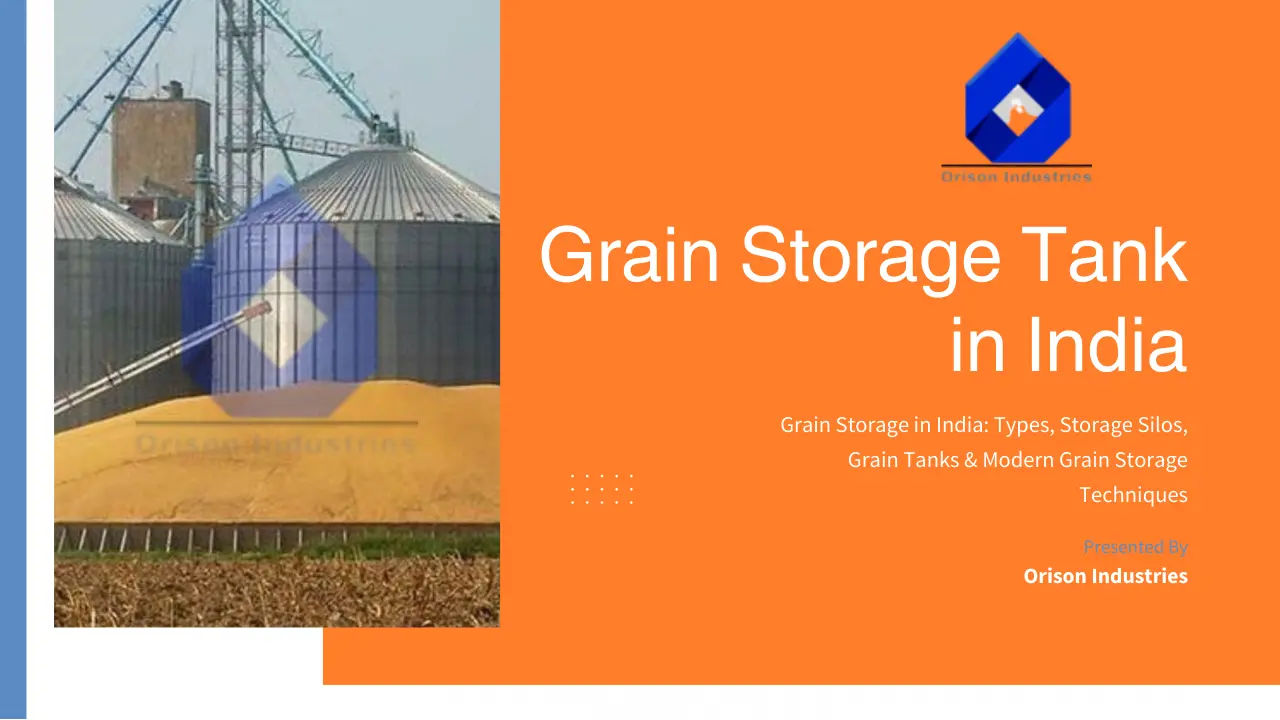
India is an agrarian country, where wheat, rice, maize, pulses, and various other grains are produced every year. Storing these grains safely is just as important as producing them. This process is called grain storage. In this blog, we will understand in detail what grain storage is, types of grain storage, grain storage in India, storage silos, grain tanks, grain storage tanks, and modern grain storage techniques.
What Is Grain Storage?
Grain storage means storing the grain after harvesting in a way that preserves its quality, weight, and nutritional value. Proper grain storage protects the grain from moisture, insects, rodents, fungus, and spoilage. In simple terms, grain storage is a process in which grain is stored safely for future use, sale, or processing. Without proper grain storage, farmers and industries face heavy losses.
Also Read: Top Companies Manufacturing Zincalume Tanks in India
Storage of Grains in India
Grain storage in India has been a major challenge due to high production and varied climatic conditions. Both traditional and modern systems are used for grain storage in India. Government agencies like FCI, state warehousing corporations, and private companies use large-scale grain storage systems. Traditional methods are still prevalent in rural areas, while modern grain storage tanks and storage silos are used at the industrial and commercial levels.
Importance of Proper Grain Storage
The main objective of grain storage is not just to store the grain, but to maintain its quality. Proper grain storage:
- Reduces post-harvest losses
- Ensures food security
- Provides better prices for farmers
- Makes long-term storage possible
- Ensures the grain meets export quality standards
This is why the role of grain storage has become very important in modern agriculture.
Types of Grain Storage
Different types of grain storage systems are used depending on the requirements. These can be broadly understood in the following categories:
- Traditional Grain Storage- This involves the use of mud bins, bamboo structures, earthen pots, and jute bags. This method is suitable for small farmers but is not effective for long-term storage.
- Bag Storage System- In this system, grains are filled into bags and stacked in godowns or warehouses. This is quite common in India, but there is a risk of insect infestation.
- Bulk Grain Storage- In bulk storage, grains are stored without bags. This involves the use of storage silos, grain tanks, and grain storage tanks. This method is considered best for large-scale and commercial use.
What Is Storage Silos?
Storage silos are large cylindrical or vertical structures designed to store grains in bulk quantities. They are made of steel, concrete, or galvanized material. Advantages of Storage Silos:
- Protection from moisture and pests
- Automated loading and unloading
- Temperature and aeration control
- Ideal for long-term grain storage
The use of storage silos is rapidly increasing in modern agriculture and food processing industries.
What Is a Grain Tank?
A grain tank is a container used to store medium or small quantities of grain. It is smaller in size compared to silos and is mostly used on farms and in small storage facilities. Grain tanks can be either temporary or permanent and are very helpful in grain handling during harvesting time.
Grain Storage Tank Explained
A grain storage tank is an advanced storage solution that stores grains in a controlled environment. These tanks are specially designed to control airflow, temperature, and moisture. Grain storage tanks are used in various industries such as rice mills, wheat storage units, food processing plants and export-oriented warehouses. They maintain grain quality for a long time.
What Is a Storage Tank?
A storage tank is a general term used for storing liquids, semi-solids, or bulk materials. In the agriculture sector, storage tanks are used for water, chemicals, and sometimes for grain handling processes. In the context of grain storage, specially designed storage tanks help protect the grain from contamination.
Grain Storage Techniques
Following effective grain storage techniques is crucial, whether the storage is traditional or modern. Some important techniques include:
- Properly drying the grain before storage
- Maintaining moisture levels within safe limits
- Regular inspection and cleaning
- Using aeration systems
- Pest control and fumigation
- Temperature monitoring
Modern grain storage techniques significantly reduce losses and extend shelf life.
Modern Grain Storage Systems in India
Currently, the demand for modern grain storage systems in India has increased considerably. Large warehouses, storage silos, grain tanks, and automated grain handling systems are making agriculture more efficient. Both private companies and the government are investing in modern grain storage infrastructure, which is directly benefiting farmers and the food supply chain.
Conclusion
Grain storage silo is a very important part of agriculture and food management. Understanding what grain storage is, the types of grain storage, grain storage in India, storage silos, grain tanks, grain storage tanks, and modern grain storage techniques is essential for farmers, traders, and industries alike. The right grain storage system not only reduces losses but also ensures better returns by maintaining quality. In today’s modern era, adopting advanced grain storage solutions is a strong step towards sustainable and profitable agriculture.

Pingback: Explore Types of Industrial Water Storage Tank | Orison Industries