

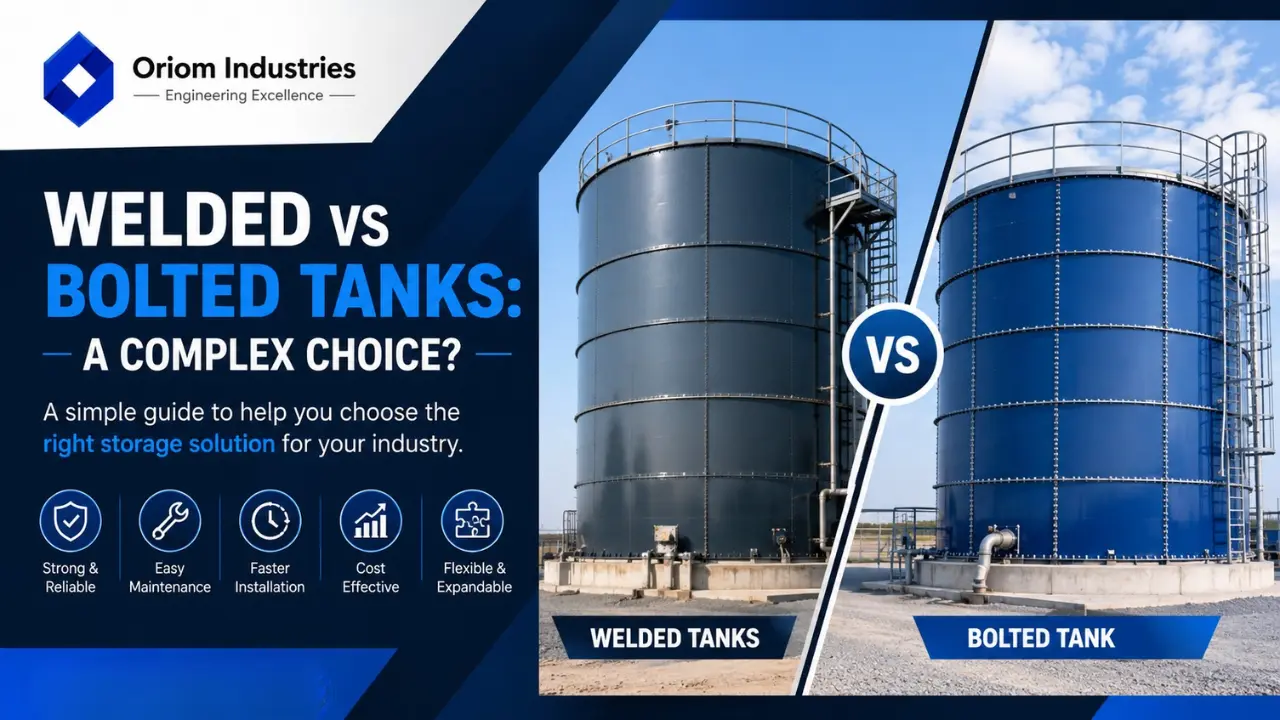
In case the requirement is for storage of water, chemical substances, waste water, or liquid materials for any industry, the right selection of tank becomes crucial. Out of the two most widely used types of tanks, bolted tanks and welded tanks are the popular ones. Although both these types provide excellent storage solutions, their differences are many when it comes to ease of installation, costs involved, and maintenance.
It can be tough for most companies to choose between these two tanks. However, having detailed knowledge about their merits and demerits will certainly help make the right selection. In this blog post, we will discuss the differences between bolted tanks and welded tanks in a very simple manner.
What Are Welded Tanks?
Welded tanks are storage tanks that are fabricated by welding steel plates together. These tanks are usually manufactured either at the project site or in a factory and then transported for installation. The welded construction creates a strong, permanent structure capable of handling large storage capacities and demanding industrial conditions.
Also Read: What is the Difference Between GRP and FRP Tank?
Common Applications of Welded Tanks
- Industrial water storage
- Wastewater treatment plants
- Oil and fuel storage
- Chemical processing industries
- Fire water storage systems
Because of their strength and durability, welded tanks are widely used in heavy-duty industrial applications.
What Is a Bolted Tank?
A bolted tank is made from prefabricated steel panels that are assembled using bolts and sealing systems. The tank components are manufactured in a controlled factory environment and transported to the site for assembly. The modular design makes bolted tanks a popular choice for projects requiring faster installation and future expansion.
Common Applications of Bolted Tanks
- Drinking water storage
- Sewage treatment plants
- Effluent treatment plants
- Agricultural water storage
- Rainwater harvesting systems
Many industries prefer a bolted tank because it offers flexibility and easy installation.
Welded Tanks vs Bolted Tank: Key Differences
1. Installation Time
One of the biggest differences between welded tanks and a bolted tank is installation speed.
Welded tanks require:
- On-site welding
- Skilled labor
- More installation time
- Additional safety measures
Bolted tanks require:
- Pre-engineered panels
- Faster assembly
- Less on-site fabrication
- Reduced project timelines
For projects with tight deadlines, a bolted tank often provides a significant advantage.
2. Transportation and Logistics
Transporting large welded tanks can sometimes be difficult, especially in remote locations.
Welded Tanks
- May require special transportation arrangements
- Difficult to move after installation
- Limited flexibility
Bolted Tank
- Delivered in panel form
- Easier transportation
- Suitable for remote project sites
This makes the bolted tank an attractive solution for locations where transportation challenges exist.
3. Expansion and Relocation
Business needs often change over time. Storage requirements may increase as operations grow.
Welded Tanks
Once installed, welded tanks are generally permanent structures. Expanding or relocating them can be expensive and complicated.
Bolted Tank
A bolted tank offers greater flexibility because:
- Additional panels can be added
- Capacity can be increased
- The tank can be dismantled and relocated if needed
This adaptability makes bolted tanks ideal for growing businesses.
4. Maintenance Requirements
Maintenance plays an important role in the overall life cycle cost of any storage system.
Welded Tanks
- Weld joints require regular inspection
- Corrosion at weld points may occur over time
- Repairs often require specialized welding work
Bolted Tank
- Individual panels can be replaced if damaged
- Easier maintenance procedures
- Reduced downtime during repairs
The modular nature of a bolted tank simplifies maintenance activities.
5. Durability and Strength
Both welded tanks and bolted tanks are designed for long-term performance.
Welded Tanks
- Excellent structural strength
- Suitable for high-pressure applications
- Strong monolithic construction
Bolted Tank
- High durability with modern coatings
- Corrosion-resistant finishes
- Reliable long-term performance
The choice depends largely on the specific storage application and operating conditions.
6. Cost Considerations
Budget is often a major factor when selecting storage solutions.
Welded Tanks
The total cost may include:
- Fabrication expenses
- On-site welding costs
- Longer installation periods
- Additional labor requirements
Bolted Tank
A bolted tank often provides:
- Faster installation
- Lower labor costs
- Reduced project delays
- Better cost control
While initial costs vary by project size, bolted tanks can offer significant savings in many applications.
7. Corrosion Protection
Storage tanks are constantly exposed to environmental conditions.
Welded Tanks
Corrosion protection depends on:
- Surface preparation
- Coating quality
- Regular maintenance
Bolted Tank
Modern bolted tanks often feature:
- Glass-fused-to-steel coatings
- Epoxy coatings
- Advanced corrosion-resistant technologies
These coatings help increase service life and reduce maintenance costs.
Which Option Is Better for Water and Wastewater Applications?
For municipal and industrial water storage projects, both solutions can perform well. However, many modern water treatment facilities prefer a bolted tank because of:
- Faster project completion
- Easy expansion options
- Lower maintenance requirements
- Reliable corrosion resistance
On the other hand, welded tanks remain a strong choice for specialized industrial applications that require custom designs and heavy-duty performance.
Factors to Consider Before Making a Decision
Before selecting between welded tanks and a bolted tank, consider the following:
- Storage Capacity- Determine the volume of liquid that needs to be stored.
- Installation Timeline- Evaluate project deadlines and construction schedules.
- Site Accessibility- Consider transportation and installation challenges.
- Future Expansion Plans- Think about whether storage requirements may increase in the future.
- Budget- Compare both initial investment and long-term maintenance costs.
- Environmental Conditions- Assess factors such as humidity, chemical exposure, and temperature variations.
Conclusion
The choice between welded tanks and a bolted tank is not always straightforward. Both solutions offer unique advantages depending on the application, budget, and operational requirements.
If your project requires maximum flexibility, quick installation, easy expansion, and simplified maintenance, a bolted tank can be an excellent choice. If you need a permanent, heavy-duty storage structure designed for demanding industrial environments, welded tanks may be the better option.
By carefully evaluating your project needs, future growth plans, and operating conditions, you can select the storage solution that delivers the best performance and long-term value for your industry.
Pingback: Understanding Modular Water Tanks and Their Benefits