

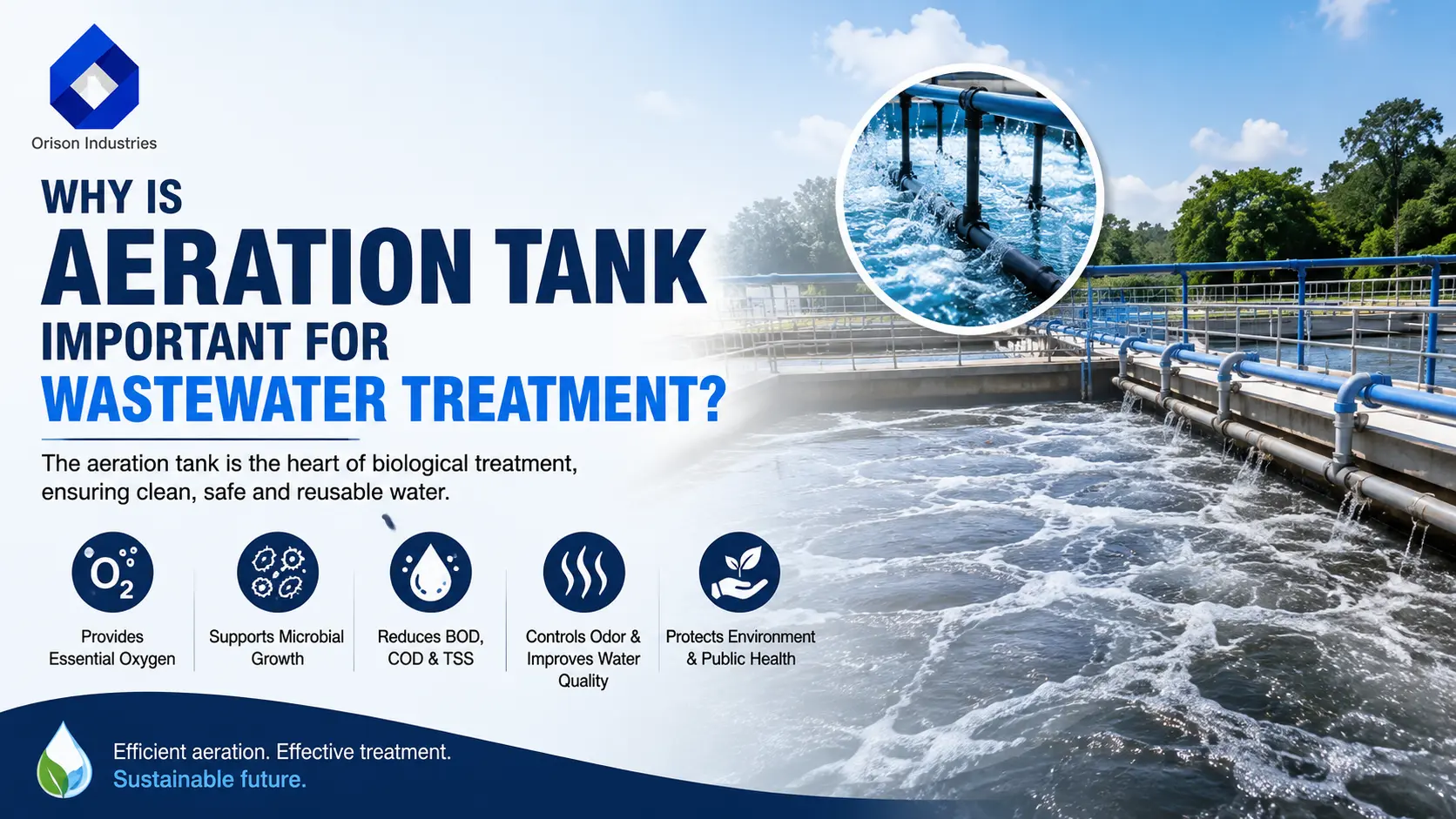
Wastewater treatment is essential for protecting the environment, conserving water resources, and ensuring safe disposal or reuse of treated water. Among the many components of a wastewater treatment plant, the aeration tank is one of the most important. It is the heart of the biological treatment process, where harmful organic pollutants are broken down by microorganisms before the water moves to the next treatment stage.
Many industries, municipalities, commercial establishments, and residential societies depend on efficient aeration in wastewater treatment to achieve the required water quality standards. Without proper aeration, wastewater cannot be treated effectively, leading to poor treatment efficiency, unpleasant odors, and environmental pollution.
In this blog, we’ll explain why an aeration tank is important for wastewater treatment, how it works, and the benefits it offers in modern sewage and industrial effluent treatment plants.
What is an Aeration Tank?
An aeration tank is a specially designed chamber used in biological wastewater treatment. It supplies oxygen to microorganisms that consume and break down dissolved organic matter, grease, oils, and other biodegradable pollutants present in wastewater.
The process of wastewater aeration creates the ideal environment for aerobic bacteria to grow and multiply. These microorganisms convert harmful contaminants into harmless by-products such as carbon dioxide, water, and biological sludge, significantly improving water quality.
Also Read: Understanding Modular Water Tanks and Their Benefits
Aeration tanks are widely used in:
- Sewage Treatment Plants (STPs)
- Effluent Treatment Plants (ETPs)
- Industrial Wastewater Treatment Plants
- Food Processing Industries
- Pharmaceutical Industries
- Textile Industries
- Chemical Processing Plants
- Residential and Commercial Complexes
Why is Aeration Important in Wastewater Treatment?
The primary purpose of aeration in wastewater treatment is to provide sufficient oxygen for aerobic microorganisms. These bacteria require oxygen to survive and efficiently decompose organic waste.
Without proper oxygen supply:
- Organic pollutants remain untreated.
- Bad odors begin to develop.
- Harmful bacteria increase.
- Treatment efficiency decreases.
- Water quality fails to meet discharge standards.
By maintaining adequate dissolved oxygen levels, the aeration process ensures faster biological treatment and stable plant performance.
How Does an Aeration Tank Work?
Understanding aeration tank wastewater treatment is simple when broken into a few steps.
1. Wastewater Enters the Tank
After preliminary treatment, wastewater flows into the aeration tank containing activated sludge rich in beneficial microorganisms.
2. Oxygen is Supplied
Air blowers or diffusers continuously inject oxygen into the tank. This oxygen supports the growth and activity of aerobic bacteria.
3. Biological Decomposition
The microorganisms feed on organic pollutants, converting them into stable compounds while reducing Biological Oxygen Demand (BOD) and Chemical Oxygen Demand (COD).
4. Formation of Biomass
As bacteria multiply, they form biological flocs that settle easily in the secondary clarifier.
5. Clarification
The treated water flows to the settling tank where sludge separates from the clarified water. Part of the sludge is returned to the aeration tank, while excess sludge is removed for further treatment.
This continuous cycle makes wastewater treatment aeration one of the most effective biological treatment methods.
Benefits of Aeration in Wastewater Treatment
Proper aeration treatment offers several important advantages for wastewater treatment systems.
Improves Treatment Efficiency
Continuous oxygen supply helps microorganisms rapidly break down biodegradable pollutants, improving overall treatment performance.
Reduces BOD and COD
One of the biggest advantages of wastewater aeration is its ability to significantly reduce BOD and COD levels, ensuring compliance with environmental regulations.
Eliminates Bad Odors
Adequate oxygen prevents anaerobic decomposition, which is responsible for foul-smelling gases such as hydrogen sulfide.
Supports Healthy Microbial Growth
The aeration process maintains an ideal environment for beneficial bacteria responsible for biological wastewater treatment.
Produces Better Quality Treated Water
Efficient aeration results in cleaner treated water suitable for safe discharge or reuse in irrigation, cooling towers, gardening, and industrial applications.
Reduces Environmental Pollution
Proper treatment prevents untreated wastewater from contaminating rivers, lakes, groundwater, and agricultural land.
Types of Aeration Systems
Different treatment plants use different aeration technologies depending on wastewater characteristics and treatment capacity.
Diffused Aeration System
Uses fine bubble or coarse bubble diffusers installed at the bottom of the aeration tank to supply oxygen efficiently.
Mechanical Surface Aerators
Rotating mechanical equipment agitates wastewater while transferring oxygen from the atmosphere.
Jet Aeration
Combines water circulation and compressed air to improve oxygen transfer efficiency.
Fine Bubble Aeration
Provides maximum oxygen transfer with lower energy consumption, making it one of the most efficient aeration methods.
Applications of Aeration Tank Wastewater Treatment
Modern aeration tank wastewater treatment systems are widely used across various industries and sectors.
- Municipal Sewage Treatment Plants
- Food & Beverage Industries
- Textile Processing Units
- Pharmaceutical Manufacturing
- Dairy Plants
- Hotels & Resorts
- Hospitals
- Residential Townships
- Commercial Buildings
- Chemical Industries
- Paper & Pulp Mills
These facilities depend on reliable aeration systems to maintain wastewater quality and comply with pollution control norms.
Factors Affecting Aeration Performance
Several factors influence the effectiveness of wastewater treatment aeration.
- Dissolved oxygen concentration
- Airflow rate
- Aeration tank design
- Wastewater characteristics
- Organic loading
- Retention time
- Temperature
- pH level
- Type of diffuser
- Proper maintenance of blowers
Regular monitoring of these parameters helps maintain consistent treatment efficiency.
Why Choose Orison Industries?
Orison Industries provides advanced wastewater treatment solutions designed to meet the needs of industrial, commercial, and municipal applications. Our wastewater treatment systems are engineered using modern technology to ensure high treatment efficiency, low operating costs, and reliable long-term performance.
We offer customized STP and ETP solutions equipped with efficient aeration systems, high-quality blowers, durable diffusers, and advanced process controls. From design and manufacturing to installation and technical support, our experienced team delivers complete wastewater treatment solutions tailored to your specific requirements.
Whether you need a compact treatment plant or a large industrial wastewater management system, Orison Industries provides dependable solutions that help protect the environment while ensuring compliance with regulatory standards.
Conclusion
An aeration tank is one of the most critical components of any biological wastewater treatment system. By supplying oxygen to beneficial microorganisms, aeration in wastewater treatment enables the efficient breakdown of organic pollutants, reduces BOD and COD levels, eliminates odors, and improves the overall quality of treated water. From municipal sewage plants to industrial treatment facilities, wastewater aeration plays a vital role in achieving sustainable and environmentally responsible wastewater management.
If you are planning to install or upgrade a wastewater treatment system, choosing an efficient aeration tank wastewater treatment solution is essential for reliable performance and long-term operational success. With advanced engineering and customized treatment solutions, Orison Industries helps industries and municipalities achieve effective wastewater treatment while protecting valuable water resources.
Pingback: Importance of Rainwater Harvesting for Industrial Water Storage