

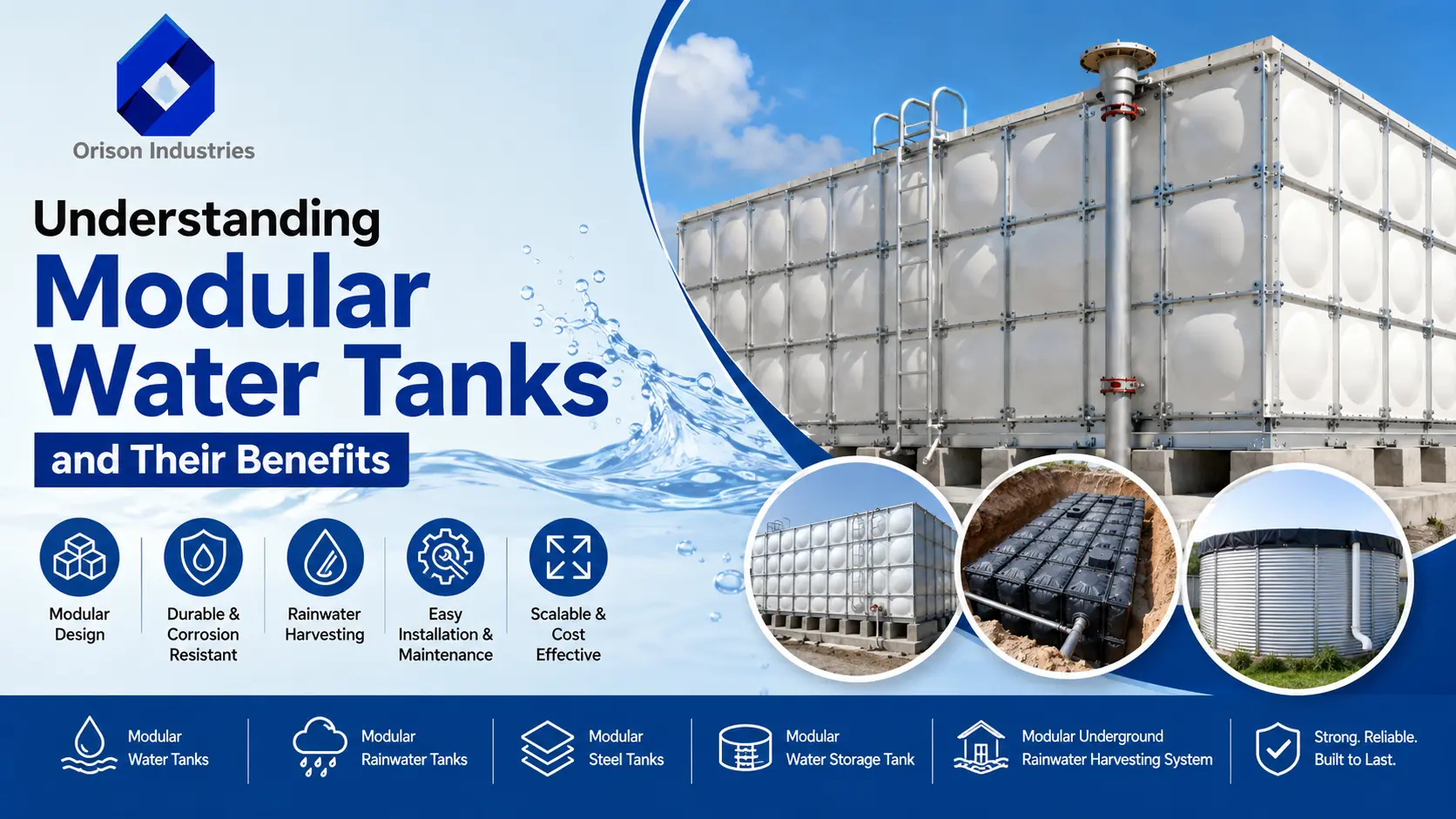
Water storage serves an essential function in the construction of residential, commercial, and industrial buildings as well as municipalities. With growing concerns regarding water conservation and storage, there is a shift from conventional water storage techniques to more sophisticated ones. An example of such an innovation in water storage systems includes the use of modular water tanks.
Whether it is for rainwater harvesting, industrial processes, fire protection systems, or potable water storage, modular tanks have become a preferred choice for organizations looking for reliable and cost-effective storage solutions. Their adaptable design allows them to be customized according to site conditions and water storage requirements.
In this blog, we will explore what modular water tanks are, how they work, and the various benefits they offer across different applications.
What Is a Modular Water Tank?
A modular water tank is a water storage system constructed using individual panels or modules that are assembled on-site to create a tank of the desired size and capacity. Unlike conventional concrete or plastic tanks, modular tanks provide greater flexibility in design, installation, and future expansion. These tanks are available in various materials and configurations to suit different storage requirements. Their modular design allows businesses and organizations to increase storage capacity without replacing the entire system. A modular water storage tank can be installed above ground, partially underground, or completely underground depending on the project requirements.
How Do Modular Tanks Work?
The concept behind modular tanks is simple yet highly effective. Individual panels are manufactured in standard sizes and transported to the installation site. These panels are then assembled using specialized fastening systems and sealing technologies to create a watertight structure.
The modular approach offers several advantages:
- Easy transportation
- Faster installation
- Flexible sizing
- Simplified maintenance
- Future expansion capability
Because the tanks are assembled on-site, they can be installed in locations where transporting large pre-fabricated tanks would be difficult or impossible.
Also Read: Welded vs Bolted Tanks: Which Storage Solution is Right for Your Industry?
Growing Demand for Modular Water Storage Solutions
With increasing urbanization and water scarcity concerns, industries and municipalities are investing in advanced water management systems. Modular water tanks are becoming increasingly popular because they provide a practical solution for storing large volumes of water without requiring extensive construction work.
These systems are commonly used for:
- Potable water storage
- Industrial process water
- Firefighting reserves
- Irrigation systems
- Rainwater harvesting
- Wastewater treatment support
Their versatility makes them suitable for projects of all sizes.
Types of Modular Water Tanks
Modular Steel Water Tanks
One of the most widely used solutions is modular steel water tanks. These tanks are manufactured using high-strength steel panels that provide exceptional durability and structural integrity.
Key advantages include:
- High load-bearing capacity
- Long service life
- Corrosion resistance with protective coatings
- Suitable for large-scale installations
Modular steel water tanks are commonly installed in industrial facilities, commercial complexes, and municipal water supply systems.
Modular Steel Tank Systems
A modular steel tank is designed to withstand challenging environmental conditions while maintaining structural stability. These tanks are ideal for storing potable water, process water, and emergency water reserves.
The robust construction of modular steel tank systems makes them suitable for applications requiring long-term reliability and minimal maintenance.
Modular Rainwater Tanks
Water conservation has become a priority for many organizations. Modular rainwater tanks are specifically designed to collect and store rainwater for future use.
These tanks help reduce dependence on municipal water supplies and support sustainable water management practices. The collected rainwater can be used for:
- Landscape irrigation
- Industrial processes
- Toilet flushing
- Cleaning operations
- Groundwater recharge
Modular rainwater tanks are increasingly used in residential developments, commercial buildings, educational institutions, and industrial facilities.
Modular Underground Rainwater Harvesting System
One of the most innovative applications of modular technology is the modular underground rainwater harvesting system. These systems are installed below ground level, making them ideal for locations where surface space is limited.
The system collects rainwater from rooftops, paved areas, and drainage channels before directing it into underground storage modules.
Benefits of Underground Rainwater Harvesting Systems
- Saves valuable surface space
- Improves water conservation
- Supports groundwater recharge
- Reduces stormwater runoff
- Enhances sustainability initiatives
- Protects stored water from contamination and sunlight exposure
A modular underground rainwater harvesting system is particularly beneficial for urban developments, commercial complexes, airports, educational campuses, and industrial parks.
Key Benefits of Modular Water Tanks
Flexibility in Design
One of the biggest advantages of a modular water tank is design flexibility. Tanks can be customized according to:
- Available installation space
- Required storage capacity
- Site conditions
- Future expansion plans
This flexibility makes modular systems suitable for a wide range of projects.
Easy Transportation and Installation
Traditional water storage structures often require significant transportation and construction efforts. Modular tanks are delivered as individual panels, making transportation easier and reducing installation challenges.
The modular construction process also significantly reduces project timelines.
Scalability
As water demand increases, additional panels can be added to expand storage capacity. This scalability eliminates the need for costly replacement projects.
Organizations can start with a smaller system and expand as requirements grow.
Durability and Long Service Life
High-quality modular tanks are engineered to withstand demanding environmental conditions.
Benefits include:
- Corrosion resistance
- Structural strength
- Weather resistance
- Low maintenance requirements
Modular steel water tanks, in particular, offer excellent durability and reliability for long-term use.
Cost-Effective Solution
Because modular systems require less construction work and offer faster installation, they often reduce overall project costs.
Additional cost benefits include:
- Reduced labor expenses
- Lower maintenance costs
- Efficient transportation
- Easy future expansion
Improved Water Management
A modular water storage tank enables efficient water collection, storage, and distribution. This improves overall water management while supporting sustainability goals.
Organizations can maintain reliable water supplies during shortages or peak demand periods.
Applications of Modular Water Tanks
Industrial Facilities
Industries use modular tanks for:
- Process water storage
- Cooling water reserves
- Fire protection systems
- Emergency water supplies
Commercial Buildings
Commercial complexes rely on modular tanks for:
- Domestic water storage
- Rainwater harvesting
- Firefighting applications
Municipal Infrastructure
Municipal authorities install modular water storage tanks for:
- Community water supply
- Water treatment facilities
- Emergency storage systems
Educational Institutions
Schools, colleges, and universities use modular rainwater tanks to support sustainable water management initiatives.
Residential Developments
Large housing projects utilize modular underground rainwater harvesting systems to improve water conservation and reduce utility costs.
Agriculture and Irrigation
Farmers and agricultural facilities use modular tanks for:
- Irrigation water storage
- Rainwater collection
- Livestock water supply
Factors to Consider When Selecting a Modular Water Tank
When choosing a modular water tank, consider the following:
- Storage Capacity- Determine the volume of water required for daily operations and emergency reserves.
- Installation Location- Evaluate whether an above-ground or underground installation is more suitable.
- Water Quality Requirements- Select materials that meet applicable standards for potable water or industrial use.
- Environmental Conditions- Consider temperature variations, rainfall patterns, and site conditions.
- Future Expansion Needs- Choose a modular system that allows easy capacity expansion as requirements change.
The Future of Modular Water Storage
As water conservation becomes increasingly important, modular storage systems are expected to play a larger role in sustainable infrastructure development. Advancements in materials, manufacturing technologies, and rainwater harvesting systems will continue to improve efficiency and performance.
The growing adoption of smart water management technologies will further enhance the effectiveness of modular water storage solutions across residential, commercial, and industrial sectors.
Conclusion
A modular water tank offers a modern, efficient, and scalable solution for water storage challenges. Whether used as a modular water storage tank, modular steel tank, modular steel water tanks, or as part of a modular underground rainwater harvesting system, these systems provide exceptional flexibility, durability, and cost-effectiveness.
As organizations continue to focus on water conservation and sustainable infrastructure development, modular rainwater tanks and advanced modular storage solutions will remain essential components of effective water management strategies. By investing in high-quality modular tanks, businesses and communities can ensure reliable water availability while supporting long-term environmental sustainability.

Pingback: Why is Aeration Tank Important for Wastewater Treatment? Guide