
Fire safety is not only a legal requirement but also an important part of protecting people, buildings, and industrial operations. Whether it is a factory, warehouse, commercial building, hospital, or residential project, having a proper firefighting system can make a major difference during emergencies. One of the most important components of this system is the fire water tank, which stores a dedicated supply of water that can be used immediately in case of a fire incident.
Many businesses invest in hydrants, sprinklers, and fire pumps but often ignore the importance of proper fire water tank design. Installing a tank without proper planning can create serious issues during emergencies because insufficient water storage or poor system design can affect the performance of the entire fire protection system. In this guide, we will explain everything about fire tanks, storage capacity requirements, and NBC compliance in India in simple language.
Also Read: What is Demineralized Water & Which Tanks Are Used for Storage?
What is a Fire Water Tank?
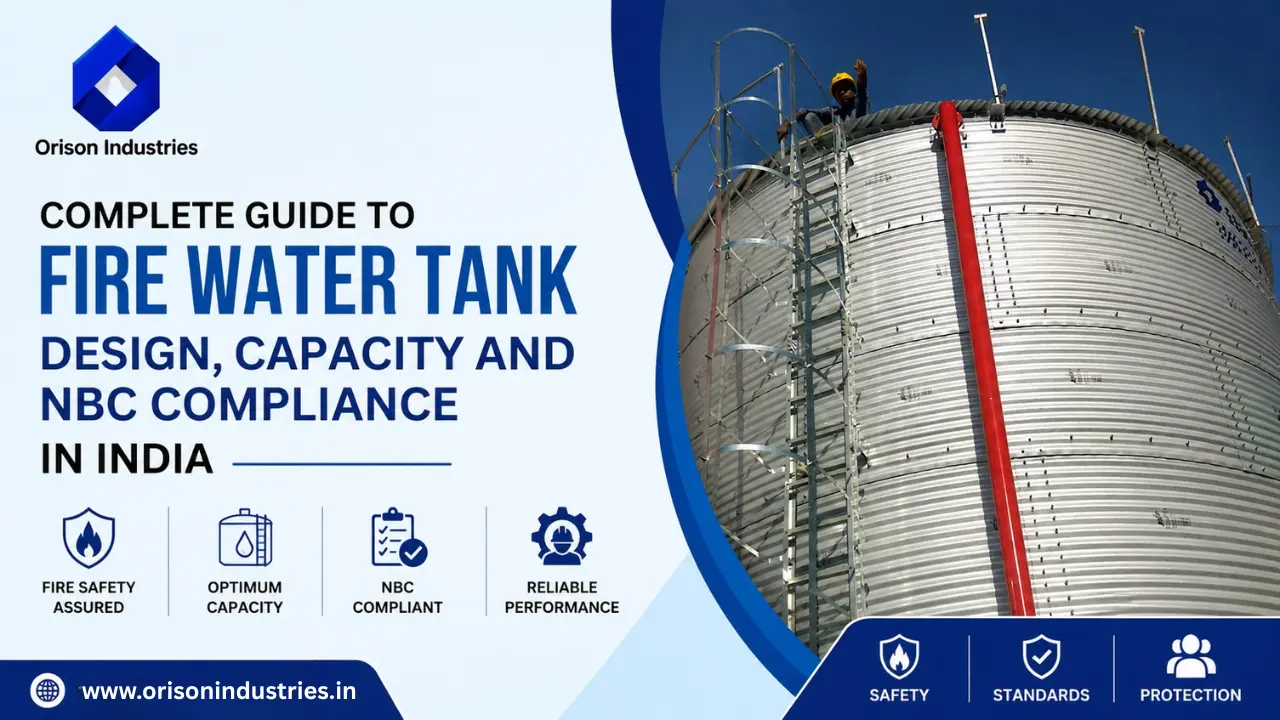
A fire water tank is a specially designed storage tank that stores water exclusively for firefighting purposes. The stored water is connected with firefighting equipment such as hydrants, pumps, hose reels, and sprinkler systems. The main purpose of a fire tank is to ensure that sufficient water remains available even when the normal water supply fails during an emergency situation.
These tanks are commonly used in various places such as:
- Industrial plants
- Manufacturing units
- Warehouses
- Commercial buildings
- Shopping malls
- Hospitals
- Residential complexes
- Educational institutions
Without sufficient storage, firefighting systems may struggle to perform effectively during critical situations.
Why Fire Water Tank Design is Important
Many people think that selecting a tank with a large storage capacity is enough, but capacity alone does not guarantee safety. Proper fire water tank design ensures that water is available at the required pressure and quantity whenever an emergency occurs. A well-designed system helps maintain smooth operation of the firefighting network and improves overall safety performance.
Good tank design offers several advantages:
- Provides sufficient water during emergencies
- Supports sprinkler and hydrant systems
- Maintains system pressure
- Helps reduce property damage
- Supports compliance requirements
- Improves safety standards
On the other hand, poor design can create problems such as inadequate water supply, pressure loss, and system failure during emergencies.
Important Factors Considered in Fire Water Tank Design
Several factors are considered while designing a fire water storage system. Every project has different requirements, so a single design approach cannot be used for all applications.
Building Type
The first factor considered is the type of building or facility. Different projects require different storage capacities. For example, residential buildings may require lower water reserves compared to large industrial plants or chemical manufacturing facilities. Warehouses with combustible materials may also require higher water storage capacity.
Fire Risk Level
Buildings are generally categorized according to their fire risk level:
- Low hazard
- Medium hazard
- High hazard
High-risk facilities usually need larger fire storage systems because the possibility of fire spread can be greater.
Water Demand
The required quantity of water depends on various firefighting components installed in the building. These include:
- Fire hydrants
- Sprinkler systems
- Hose reels
- Fire pumps
The total water requirement is calculated based on the expected demand during an emergency.
Duration Requirement
A firefighting system should provide sufficient water for a specific duration. Depending on the building type and risk category, the required duration may vary.
Some facilities may need water availability for:
- 60 minutes
- 90 minutes
- 120 minutes or more
Longer operating duration generally increases the required storage capacity.
Space Availability
The available area for installation also affects fire water tank design. Depending on site conditions, different tank types can be selected.
Common Types of Fire Water Tanks
Different industries and projects use different fire water tanks depending on their requirements.
Underground Fire Water Tanks
Underground tanks are installed below the ground surface. These tanks are commonly used where space availability is limited.
They provide benefits such as:
- Space saving
- Better temperature protection
- Reduced external damage risk
- Above-Ground Fire Tanks
These tanks are installed above the ground level and are widely used in industrial applications.
Their advantages include:
- Easy inspection
- Simple maintenance
- Faster installation
- RCC Fire Tanks
Reinforced Cement Concrete tanks are commonly used for permanent installations because of their strength and durability.
Steel Fire Tanks
Steel tanks are becoming increasingly popular because they provide flexibility and faster installation compared to traditional systems.
Understanding Fire Water Tank Capacity
Capacity is one of the most important aspects of fire water tank design. The storage requirement cannot be selected randomly because every project has different water demands.
Several factors affect capacity requirements, including:
- Building size
- Fire hazard level
- Number of firefighting systems
- Water discharge rate
- Protection duration
- Future expansion plans
Selecting insufficient storage can create serious operational risks during emergencies, while excessively oversized tanks may increase project costs unnecessarily. Proper capacity planning helps maintain an effective balance between safety and investment.
NBC Compliance for Fire Water Tanks in India
The National Building Code (NBC) provides guidelines related to fire safety systems in India. These guidelines help ensure that buildings maintain adequate safety standards.
NBC requirements generally focus on:
- Minimum fire water storage
- Fire pump requirements
- Hydrant system support
- Sprinkler system requirements
- Accessibility for maintenance and inspection
Following NBC guidelines is important because it helps improve system reliability and reduces safety risks. Ignoring these requirements may lead to operational issues and non-compliance problems.
Common Mistakes to Avoid During Fire Water Tank Design
Many projects face problems because of avoidable design mistakes. Incorrect planning can affect the entire firefighting system.
Some common mistakes include:
- Selecting insufficient storage capacity
- Ignoring future expansion requirements
- Using incorrect pump sizing
- Poor pipe network planning
- Lack of maintenance access
- Not considering NBC requirements
Avoiding these issues during the design stage can save both time and cost in the future.
Why Choose Orison Industries?
At Orison Industries, we understand that every project has different fire protection requirements. We focus on delivering reliable and customized storage solutions designed according to industry standards and operational needs.
Our solutions are developed with a focus on:
- Quality construction
- Long service life
- Efficient performance
- Customized design
- Reliable operation
Whether you require storage systems for industrial plants, warehouses, commercial projects, or manufacturing facilities, selecting the right fire tank can significantly improve safety and system performance.
Conclusion
A fire water tank is much more than a simple storage structure. It serves as an important part of a complete fire protection system. Proper fire water tank design, suitable storage capacity, and compliance with NBC guidelines help ensure that firefighting systems operate effectively during emergencies. Choosing the correct design and capacity not only improves safety but also protects people, equipment, and business operations. Investing in high-quality fire water tanks today can help prevent major losses in the future.